

Every parent senses that educational toys are “good for kids” — but what exactly do they do? The research from child development is surprisingly specific: the right toys at the right age measurably build brain architecture, language, maths readiness and even emotional control. Here are 10 benefits of educational toys, what the science says about each, and which type of toy delivers it.
1. They build fine motor skills — the foundation for writing
Gripping a chunky puzzle piece, rotating it, fitting it into a slot — every repetition strengthens the small hand muscles and hand–eye coordination a child will later need to hold a pencil. Occupational therapists routinely recommend knob and board puzzles for exactly this reason.
2. They grow vocabulary faster than screens
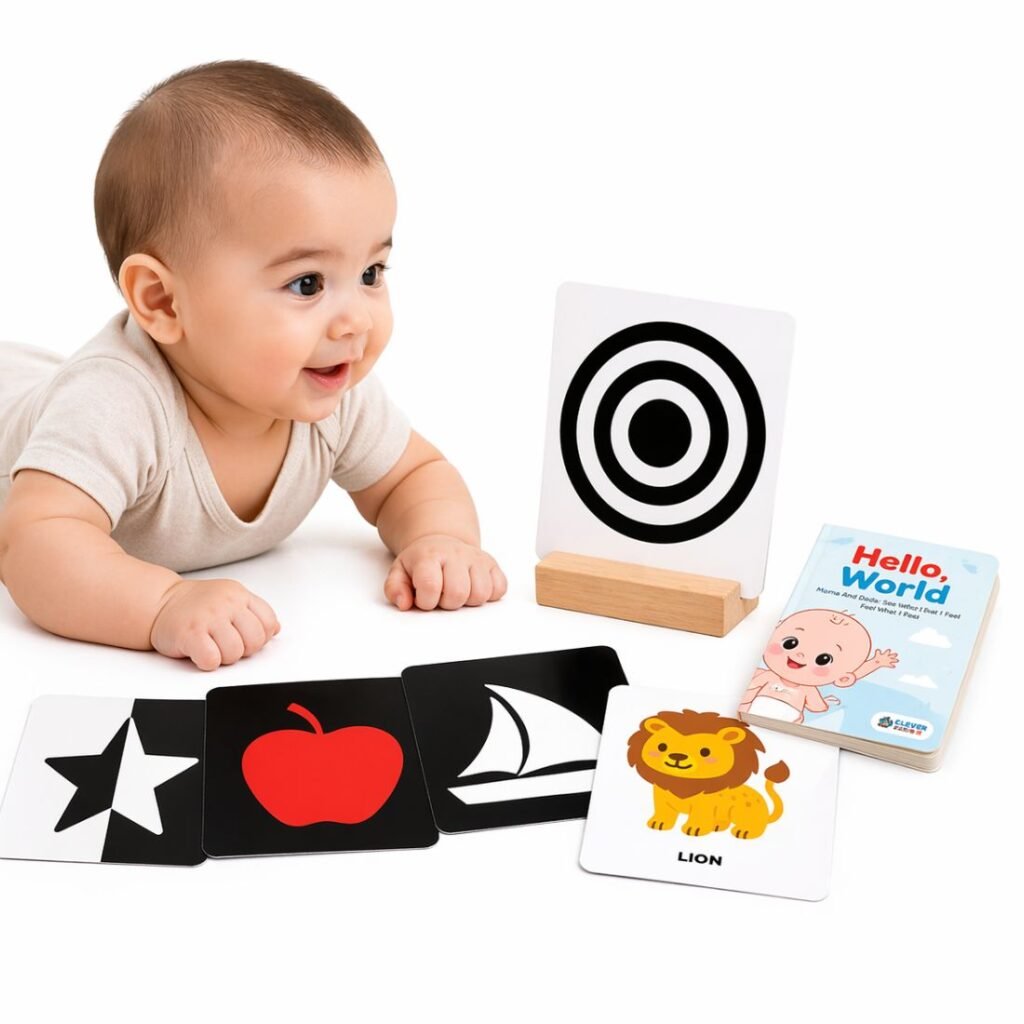
Language grows through back-and-forth exchange, not one-way audio. A parent and child naming flash card pictures together produces the serve-and-return conversation that researchers link directly to vocabulary size at school entry.
3. They make early maths physical
Children understand numbers through their hands years before they understand them on paper. Holding a wooden “3”, counting three critters, splitting a foam pizza into quarters — this concrete-first path is exactly how Montessori and modern maths teaching both work.
4. They stretch attention span
Fast-cutting videos train the brain to expect a new stimulus every few seconds. A puzzle trains the opposite: stay with one problem until it’s solved. Parents consistently report longer focused play with open-ended toys than with electronic ones.
5. They teach frustration tolerance
The piece doesn’t fit. The tower falls. And then — it works. Educational toys deliver small, safe doses of frustration followed by achievement, which is precisely how children build the “I can figure this out” muscle psychologists call self-efficacy.
6. They build real-world knowledge
A child who assembles an India map puzzle twenty times knows the states and capitals for life — not as memorised lines but as shapes their hands remember. Knowledge gained through play sticks.
7. They support bilingual learning
Indian children typically grow up between two or more languages. Toys and games that work in both — like our free Bolo Cards speaking game in English and Hindi — let children practise each language in the same playful format.
8. They replace screen time without a fight
You can’t take away a screen and offer nothing. An engaging hands-on toy is the “yes” that makes the “no” workable — see our 20 screen-free activities for ready-made swaps.
9. They create parent–child connection
Fifteen minutes on the floor with a puzzle is fifteen minutes of shared attention, conversation and laughter. The toy is the excuse; the connection is the benefit — and it’s the one children remember.
10. They’re the cheapest tuition you’ll ever buy
A few hundred rupees of well-chosen educational toys, used daily for two years, delivers more practice in letters, numbers and focus than many times that amount spent later on remedial classes. Early play is the highest-return education spending there is.
Frequently asked questions
Do educational toys really make a difference?
Yes — with one condition: the child must actively play, ideally with an adult joining in some of the time. The toy creates the opportunity; the hands-on repetition and conversation deliver the benefit.
How much time should kids spend with educational toys daily?
There’s no required dose — even 20–30 minutes of focused hands-on play daily adds up remarkably. Follow the child’s interest rather than a timetable.
Are educational toys better than educational apps?
For under-5s, hands-on toys win clearly: they build motor skills, use all the senses and involve no screen-time trade-offs. The best pattern we’ve seen is short app/game sessions that introduce a skill, with physical toys doing the real practice.